Buy arbeitsmarkt.eu ?
We are moving the project
arbeitsmarkt.eu .
Are you interested in purchasing the domain
arbeitsmarkt.eu ?
domain@kv-gmbh.de · 0541-91531010
Buy arbeitsmarkt.eu ?
How do you calculate the braking distance, the braking process, and the braking deceleration?
The braking distance can be calculated using the formula: braking distance = (initial velocity^2) / (2 * deceleration), where the deceleration is the rate at which the vehicle slows down. The braking process involves the driver applying the brakes, which causes friction between the brake pads and the wheels, leading to a decrease in the vehicle's speed. The braking deceleration can be calculated by dividing the change in velocity by the time it takes for the vehicle to come to a complete stop. **
How do you calculate the braking time and braking distance?
Braking time and braking distance can be calculated using the formula: Braking distance = (initial velocity^2) / (2 * deceleration) Where initial velocity is the speed of the vehicle before braking, and deceleration is the rate at which the vehicle slows down. Braking time can be calculated by dividing the braking distance by the initial velocity. These calculations are based on the assumption of constant deceleration, and may vary depending on factors such as road conditions and the vehicle's braking system. **


Similar search terms for Braking
Top-Angebote
Products related to Braking:
-
My F*cking Job Sucks: A Guided Workbook for When Your Job Is Driving You Crazy by Chartwell Books - Paperback Self-Help Career Wellness WorkbookA witty and no-nonsense guided workbook for anyone who has ever dreaded a Monday morning. Packed with candid prompts, quick quizzes, and simple meditations, it helps readers unpack exactly why their job is grinding them down and gives practical tools to reclaim their headspace. Written with humor and honesty, it's part journal, part therapy session, and entirely relatable for the modern worker stuck in a job that just isn't working for them anymore. The book tackles the emotional, physical, intellectual, and financial toll a bad job can take, covering more than 100 prompts to help readers take control of their work life. Published by Chartwell Books, this workbook is a candid and practical guide to navigating a difficult job situation.2,99 £*Shipping: 2,99 £Secure redirect to the provider
-
Rupa Publications Your Job Is Not Your Personality by Ken Wallace - Paperback Career & Self-Help Book on Workplace Identity and SuccessYour Job Is Not Your Personality is a thought-provoking book that challenges the modern hustle mindset. Ken Wallace urges readers to stop measuring self-worth by job titles, late nights, or promotions. This book offers honest advice on winning at work without letting work define who you are. It's a refreshing read for professionals navigating burnout culture. Written by Ken Wallace and published by Rupa Publications, this paperback book is a bold look at the fine line between ambition and identity. It's a punchy career manifesto that draws attention to the traps that quietly hijack careers and wellbeing alike. Rather than another dry productivity guide, Wallace calls out the common pitfalls that can quietly derail careers and wellbeing.2,99 £*Shipping: 2,99 £Secure redirect to the provider
-
NYX Professional Makeup Jelly Job sparkle lip gloss with magnifying effect shade Glow Job 7.5 mlNYX Professional Makeup Jelly Job, 7.5 ml, Lip Glosses for Women, Lips as smooth as glass and as reflective as a mirror? The NYX Professional Makeup Jelly Job lip gloss can turn this dream into reality. It envelops the lips in a high-gloss formula, smoothing and evening out their surface to mask any lines or wrinkles while giving your lips long-lasting comfort. It promotes their soft appearance, preventing visible dryness that can interfere with your perfect makeup look. In no time at all, it helps you achieve beautifully glossy, luscious lips, making them the centre of attention and irresistibly kissable. Characteristics: ensures a high gloss gives lips more volume moisturises and softens lips smooths fine lines on the lips details the lips perfectly How to use: Apply an even layer to the lips with an applicator. Repeat as necessary. Can also be applied over lipstick or other makeup.7,31 £*Shipping: 3,99 £Secure redirect to the provider
-
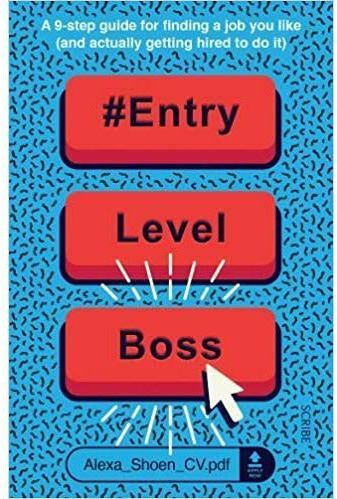
Scribe UK Find a Job - #ENTRYLEVELBOSS - a 9-step guide for finding a job you likeFind a Job - Banging your head against the wall with the job search? #ENTRYLEVELBOSS will help you stop freaking out. Miserable in your current role but no idea what to do next? With this book you'll be able to make a decision, no personality tests required. Convinced that you are the most unhireable person on this planet? That's statistically improbable - and you'll be amazed at how employable you'll be by the time you have finished reading. This is personal training for your career, based on a step-by-step plan that includes: All the intel you need about getting hired in today's world, in today's industries, and with today's tools. Hyper-specific advice including templates for networking emails, CVs, and cover letters. Straight-to-the-point guidance about what not to do. A solid dose of humour and emotional support from someone who really has been there. The world of work has changed, and getting hired today for a job you actually want is going to take a lot more than a neatly typed cover letter and a well-pressed suit. But along with all the challenges of the new economy come unprecedented opportunities, and careers expert Alexa Shoen is here to unlock them for you.4,99 £*Shipping: 1,99 £Secure redirect to the provider


-
How do you calculate braking time and braking distance in physics?
In physics, braking time and braking distance can be calculated using the equations of motion and the principles of kinematics. The braking time can be calculated using the equation t = v/u, where t is the braking time, v is the final velocity, and u is the initial velocity. The braking distance can be calculated using the equation d = (v^2 - u^2) / (2a), where d is the braking distance and a is the deceleration. These equations take into account the initial and final velocities, as well as the deceleration of the object to determine the braking time and distance. **
-
What are the differences between braking to walking speed and braking?
Braking to walking speed typically involves gradually reducing speed until coming to a complete stop, whereas braking refers to the act of slowing down a moving vehicle. When braking to walking speed, the goal is to smoothly decelerate without any sudden stops, while braking may involve more forceful actions to slow down quickly. Additionally, braking to walking speed is often used in situations where a vehicle needs to stop at a precise location, such as at a crosswalk or intersection. **
-
Is braking a reflex?
Braking can be considered a reflex in certain situations. When a driver reacts to a sudden obstacle or hazard on the road by immediately pressing the brake pedal, it can be seen as a reflexive action. This is because the response is automatic and occurs without conscious thought. However, braking can also be a learned behavior, as drivers are trained to use their brakes in specific situations through practice and experience. Therefore, while braking can be a reflex in some cases, it can also be a learned and intentional action. **
-
What is the difference between braking with a clutch and braking without?
Braking with a clutch involves pressing the clutch pedal while simultaneously applying the brakes, which disengages the engine from the transmission and allows the vehicle to coast to a stop. This method is often used in manual transmission vehicles to prevent stalling. On the other hand, braking without using the clutch means simply applying the brakes without disengaging the engine from the transmission, which can cause the vehicle to stall if the engine speed drops too low. In summary, the main difference is that braking with a clutch allows the vehicle to coast to a stop without stalling, while braking without the clutch can potentially lead to stalling if not done properly. **

What is the difference between a full braking and an emergency braking?
Full braking refers to applying the brakes with maximum force in a controlled manner to slow down or stop the vehicle. This can be done in response to normal traffic conditions or when approaching a stop sign or traffic light. On the other hand, emergency braking is a sudden and forceful application of the brakes in response to an unexpected hazard or danger, such as a pedestrian stepping into the road or a vehicle suddenly stopping in front. Emergency braking is typically done to avoid a collision and requires quick reflexes and a strong, immediate response from the driver. **
What is the formula for braking acceleration and braking time in physics?
The formula for braking acceleration is given by \( a = \frac{v_f - v_i}{t} \), where \( a \) is the braking acceleration, \( v_f \) is the final velocity, \( v_i \) is the initial velocity, and \( t \) is the time taken to come to a stop. The formula for braking time can be calculated using the equation \( t = \frac{v_f - v_i}{a} \), where \( t \) is the braking time. These formulas are used to calculate the rate at which an object slows down when braking. **
Top-Angebote
Products related to Braking:
-
All Categories Goods Wheel Speed Sensor Right & Left, Enhance Steering & Braking Stability, Long Lasting Performance Wheel Speed Sensor Right & Left, Enhance Steering & Braking Stability, Long Lasting PerformanceImprove your vehicle's braking and steering performance with 2 pcs Wheel Speed Sensors Right & Left, designed to enhance your driving experience. These 100% factorytested sensors offer stable, longlasting performance, providing you with the...46,97 $*Shipping: 0,00 $Secure redirect to the provider
-
Uplift Essentials Titanium Brake Lever Piston MTB Hydraulic Seal Repair Kit High Yield Braking Interaction Hub 1 SetAchieve deceleration optimization with this Precision Titanium Alloy Brake Piston. Specifically engineered for mechanical transparency, this highperformance technical tool acts as a vital tool for actuation efficiency, neutralizing the limitations...57,97 $*Shipping: 0,00 $Secure redirect to the provider
-
My F*cking Job Sucks: A Guided Workbook for When Your Job Is Driving You Crazy by Chartwell Books - Paperback Self-Help Career Wellness WorkbookA witty and no-nonsense guided workbook for anyone who has ever dreaded a Monday morning. Packed with candid prompts, quick quizzes, and simple meditations, it helps readers unpack exactly why their job is grinding them down and gives practical tools to reclaim their headspace. Written with humor and honesty, it's part journal, part therapy session, and entirely relatable for the modern worker stuck in a job that just isn't working for them anymore. The book tackles the emotional, physical, intellectual, and financial toll a bad job can take, covering more than 100 prompts to help readers take control of their work life. Published by Chartwell Books, this workbook is a candid and practical guide to navigating a difficult job situation.2,99 £*Shipping: 2,99 £Secure redirect to the provider
-
Rupa Publications Your Job Is Not Your Personality by Ken Wallace - Paperback Career & Self-Help Book on Workplace Identity and SuccessYour Job Is Not Your Personality is a thought-provoking book that challenges the modern hustle mindset. Ken Wallace urges readers to stop measuring self-worth by job titles, late nights, or promotions. This book offers honest advice on winning at work without letting work define who you are. It's a refreshing read for professionals navigating burnout culture. Written by Ken Wallace and published by Rupa Publications, this paperback book is a bold look at the fine line between ambition and identity. It's a punchy career manifesto that draws attention to the traps that quietly hijack careers and wellbeing alike. Rather than another dry productivity guide, Wallace calls out the common pitfalls that can quietly derail careers and wellbeing.2,99 £*Shipping: 2,99 £Secure redirect to the provider
-
How do you calculate the braking distance, the braking process, and the braking deceleration?
The braking distance can be calculated using the formula: braking distance = (initial velocity^2) / (2 * deceleration), where the deceleration is the rate at which the vehicle slows down. The braking process involves the driver applying the brakes, which causes friction between the brake pads and the wheels, leading to a decrease in the vehicle's speed. The braking deceleration can be calculated by dividing the change in velocity by the time it takes for the vehicle to come to a complete stop. **
-
How do you calculate the braking time and braking distance?
Braking time and braking distance can be calculated using the formula: Braking distance = (initial velocity^2) / (2 * deceleration) Where initial velocity is the speed of the vehicle before braking, and deceleration is the rate at which the vehicle slows down. Braking time can be calculated by dividing the braking distance by the initial velocity. These calculations are based on the assumption of constant deceleration, and may vary depending on factors such as road conditions and the vehicle's braking system. **
-
How do you calculate braking time and braking distance in physics?
In physics, braking time and braking distance can be calculated using the equations of motion and the principles of kinematics. The braking time can be calculated using the equation t = v/u, where t is the braking time, v is the final velocity, and u is the initial velocity. The braking distance can be calculated using the equation d = (v^2 - u^2) / (2a), where d is the braking distance and a is the deceleration. These equations take into account the initial and final velocities, as well as the deceleration of the object to determine the braking time and distance. **
-
What are the differences between braking to walking speed and braking?
Braking to walking speed typically involves gradually reducing speed until coming to a complete stop, whereas braking refers to the act of slowing down a moving vehicle. When braking to walking speed, the goal is to smoothly decelerate without any sudden stops, while braking may involve more forceful actions to slow down quickly. Additionally, braking to walking speed is often used in situations where a vehicle needs to stop at a precise location, such as at a crosswalk or intersection. **
Similar search terms for Braking
-
NYX Professional Makeup Jelly Job sparkle lip gloss with magnifying effect shade Glow Job 7.5 mlNYX Professional Makeup Jelly Job, 7.5 ml, Lip Glosses for Women, Lips as smooth as glass and as reflective as a mirror? The NYX Professional Makeup Jelly Job lip gloss can turn this dream into reality. It envelops the lips in a high-gloss formula, smoothing and evening out their surface to mask any lines or wrinkles while giving your lips long-lasting comfort. It promotes their soft appearance, preventing visible dryness that can interfere with your perfect makeup look. In no time at all, it helps you achieve beautifully glossy, luscious lips, making them the centre of attention and irresistibly kissable. Characteristics: ensures a high gloss gives lips more volume moisturises and softens lips smooths fine lines on the lips details the lips perfectly How to use: Apply an even layer to the lips with an applicator. Repeat as necessary. Can also be applied over lipstick or other makeup.7,31 £*Shipping: 3,99 £Secure redirect to the provider
-
Scribe UK Find a Job - #ENTRYLEVELBOSS - a 9-step guide for finding a job you likeFind a Job - Banging your head against the wall with the job search? #ENTRYLEVELBOSS will help you stop freaking out. Miserable in your current role but no idea what to do next? With this book you'll be able to make a decision, no personality tests required. Convinced that you are the most unhireable person on this planet? That's statistically improbable - and you'll be amazed at how employable you'll be by the time you have finished reading. This is personal training for your career, based on a step-by-step plan that includes: All the intel you need about getting hired in today's world, in today's industries, and with today's tools. Hyper-specific advice including templates for networking emails, CVs, and cover letters. Straight-to-the-point guidance about what not to do. A solid dose of humour and emotional support from someone who really has been there. The world of work has changed, and getting hired today for a job you actually want is going to take a lot more than a neatly typed cover letter and a well-pressed suit. But along with all the challenges of the new economy come unprecedented opportunities, and careers expert Alexa Shoen is here to unlock them for you.4,99 £*Shipping: 1,99 £Secure redirect to the provider
-
Pinot Grigio 'Piantagrane' Villa Job 2023Il “Piantagrane” è un Pinot Grigio autentico e schietto prodotto dalla cantina Villa Job, una realtà artigianale portata avanti con entusiasmo e passione da Alessandro Job, ingegnere milanese che ha deciso di seguire la sua passione verso il mondo del vino. Oggi la sua nuova casa è l’altopiano di Pozzuolo del Friuli, dove ha sede la sua tenuta, collocata a ridosso di Udine nella zona del Grave, un’area troppo spesso dimenticata, ma in grado di regalare espressioni di grande vitalità e personalità. Proprio come dimostra questo Pinot Grigio, figlio di una filosofia strettamente artigianale e biologica, che si focalizza sulla valorizzazione della tipicità territoriale. “Una bottiglia di vino deve contenere cultura”, dice Alessandro, perché deve esprimere nella maniera più trasparente possibile la sua terra d’origine e non piegarsi alle mode, convenzioni e ai fattori commerciali che a volte tendono ad uniformare il prodotto per il mercato. Questo “Piantagrane”, al pari delle altre etichette, è dunque un racconto della terra, in cui affiorano storie antiche e sapori genuini. La ricetta del Pinot Grigio “Piantagrane” è molto semplice. L’idea è di valorizzare al massimo il suolo dove vengono coltivate le varietà attraverso micro-vinificazioni separate per ogni singola parcella. Il tutto viene eseguito dai lieviti indigeni che sono presenti naturalmente sulle uve e catalizzano la fermentazione alcolica all’interno di botti aperte. Il mosto rimane a contatto con le sue bucce per almeno 3 giorni, arricchendosi di sostanza e colore. Bastano pochi giorni di macerazione per far si che il vino si vesta di un manto dorato, tendente all’arancio. La maturazione prosegue all’interno di barrique esauste e vasche di cemento per 9 mesi totali. Il “Piantagrane” Villa Job si presenta con una tonalità ambrata lievemente velata, dovuta all’assenza di filtrazioni. Al naso è un tripudio di sensazioni olfattive che richiamano l’albicocca, gli agrumi maturi, le erbe aromatiche, le sfumature di spezie dolci, le essenze floreali e leggeri accenti dolci di miele e mandorla. Il sorso è immediato e diretto, ricco di sostanza ed energia, coccolato da una spiccata freschezza tagliente e da un leggerissimo tannino.22,00 £*Shipping: 48,00 £Secure redirect to the provider
-
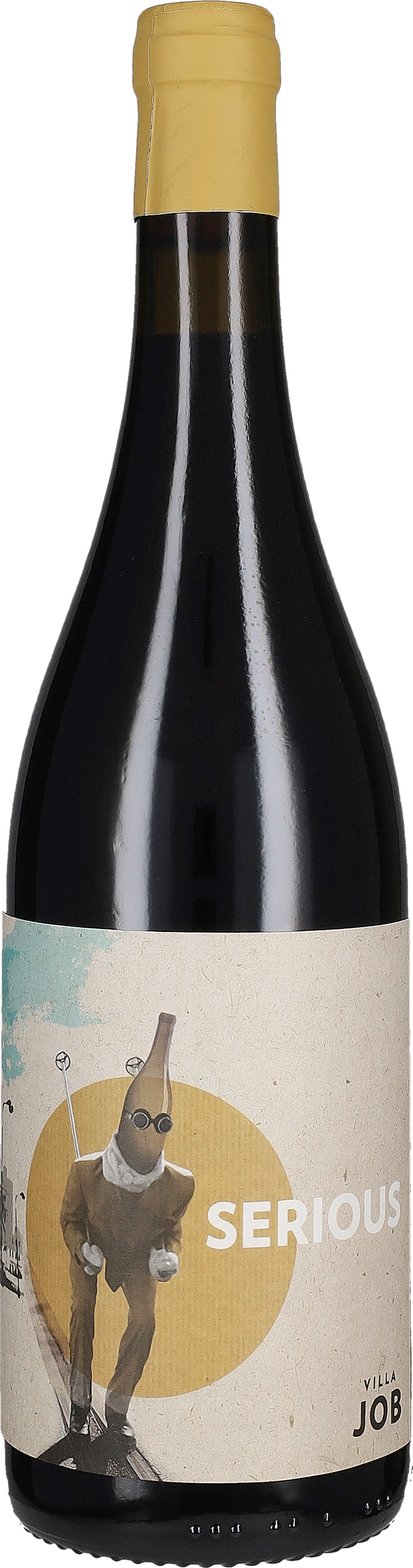
Refosco dal Peduncolo Rosso 'Serious' Villa JobThe Refosco Serious from Villa Job is a dynamic liquid, pressed red fruit and spice, and played entirely on finesse. A lot of attention towards Villa Job, a Friulian reality that is increasingly attracting enthusiasts thanks to interpretations that convince and improve exponentially every year. 6 and a half hectares of vineyard located on the plateau of Pozzuolo del Friuli, dedicated to Refosco, Ribolla Gialla, Schioppettino, and Sauvignon, which grow without the use of chemical or synthetic substances and integrating the dictates of organic farming, with some biodynamic practices. The wines are expressive, multifaceted, and often do not give up a natural richness. Crosswise nectars! The Villa Job Serious is obtained from pure Refosco grapes grown in the Grave area at 90 meters above sea level on soils rich in marl, clay, and silt. If in the vineyard, as already mentioned, the precepts of organic farming are followed, integrated with others from biodynamics, in the cellar the process continues with spontaneous alcoholic fermentation and maceration on the skins that occurs for 10 days in open tonneaux. The liquid agesfor 5 months in cement tanks, 7 months in barrels of 25hl from Slavonia and 2 months in bottle. The red Serious presents itself in the glass with an intense and lively ruby color. Rich, complex, and varied nose, where clear references to ripe cherry as well as countless dark berry spices are recognized. The sip is splendid, as it amazes with its ability to blend richness of matter and references to a frankly irresistible drink. Beautiful the grain of the tannin, which outlines a creamy and velvety liquid, but never complacent. For the ultimate peace of the senses, it is recommended to pair it with first courses based on mushrooms or vegetables, cold cuts, or not too rich meat preparations. Cheers!21,00 £*Shipping: 48,00 £Secure redirect to the provider
-
Is braking a reflex?
Braking can be considered a reflex in certain situations. When a driver reacts to a sudden obstacle or hazard on the road by immediately pressing the brake pedal, it can be seen as a reflexive action. This is because the response is automatic and occurs without conscious thought. However, braking can also be a learned behavior, as drivers are trained to use their brakes in specific situations through practice and experience. Therefore, while braking can be a reflex in some cases, it can also be a learned and intentional action. **
-
What is the difference between braking with a clutch and braking without?
Braking with a clutch involves pressing the clutch pedal while simultaneously applying the brakes, which disengages the engine from the transmission and allows the vehicle to coast to a stop. This method is often used in manual transmission vehicles to prevent stalling. On the other hand, braking without using the clutch means simply applying the brakes without disengaging the engine from the transmission, which can cause the vehicle to stall if the engine speed drops too low. In summary, the main difference is that braking with a clutch allows the vehicle to coast to a stop without stalling, while braking without the clutch can potentially lead to stalling if not done properly. **
-
What is the difference between a full braking and an emergency braking?
Full braking refers to applying the brakes with maximum force in a controlled manner to slow down or stop the vehicle. This can be done in response to normal traffic conditions or when approaching a stop sign or traffic light. On the other hand, emergency braking is a sudden and forceful application of the brakes in response to an unexpected hazard or danger, such as a pedestrian stepping into the road or a vehicle suddenly stopping in front. Emergency braking is typically done to avoid a collision and requires quick reflexes and a strong, immediate response from the driver. **
-
What is the formula for braking acceleration and braking time in physics?
The formula for braking acceleration is given by \( a = \frac{v_f - v_i}{t} \), where \( a \) is the braking acceleration, \( v_f \) is the final velocity, \( v_i \) is the initial velocity, and \( t \) is the time taken to come to a stop. The formula for braking time can be calculated using the equation \( t = \frac{v_f - v_i}{a} \), where \( t \) is the braking time. These formulas are used to calculate the rate at which an object slows down when braking. **
* All prices are inclusive of VAT and, if applicable, plus shipping costs. The offer information is based on the details provided by the respective shop and is updated through automated processes. Real-time updates do not occur, so deviations can occur in individual cases. ** Note: Parts of this content were created by AI.